I found this C|Net news article via Slashdot talking about a company named Willow Garage that hopes to develop domestic robots, autonomous boats, and autonomous cars. I’m especially interested in this development since I’m such a fan of Asimov, who is attributed to first using the term ‘robotics’. I’m not sure that there will be any sentient robots any time soon, but I’m glad to see that the development information will be open source. I think that keeping the design specifications open will be a good thing, rather then keep them secret which could lead to a monopoly like US Robotics and Mechanical Men in Asimov’s writing.
How far do you think robotics will have progressed 10, 20, or even 50 years from now? I’m interested in reading your comments about this.
I am always amazed that the developments in robotics that are happening in my lifetime. I wish that Isaac Asimov had lived just a bit longer so he could see what the industry is producing today. Sarcos has made the prototype, which is under development in Japan. This robot can recover from pushes intended to topple it over. I’m sure a lot of you have seen the video of the ASIMO robot falling down some simple steps. This new robot with flexible joints and advanced balancing system appears to be the next generation of humanoid robots. For more information, including a video demonstration, check out the full article at NewScientistTech. Found via SlashDot
Tonight with my wife, I watched an interesting episode of Nova titled “The World’s Smartest Machine.” Romantic, right? You can tell we are a couple of geeks at heart. Being a huge fan of Asimov and his robot creations, I am continually amazed at the progress of robotics and artificial intelligence. As a kid I was playing chess as early as the 3rd grade. I’ve always thought of myself as a pretty good chess player. When I heard about a computer that supposedly could beat a world champion chess player, I was intrigued. Garry Kasparov battled IBM’s Deep Blue supercomputer in 1996 and won, however he eventually lost a rematch in 1997. Well, IBM is back at it, this time taking on Jeopardy. Nova takes us behind the scenes with the developers of “Watson,” the next step in AI. I was disappointed when the episode ended and it didn’t say who won. I didn’t realize until logging on PBS.org that the contest actually was taking place while I was watching Nova (on my media center PC). After some frantic Google searches, I eventually came across a Twitter feed with a link to a Youtube posting of the episode. This was not quite 2 hours after the episode aired! Isn’t technology great? I expect the Youtube post to be served a DMCA take down, so watch it soon if you plan on it. In addition to the episode at the end of this post, I’ve embedded the Nova preview and an humorous parody of the challenges Watson overcame during his development. I suggest watching the Nova episode first. If you are at all interested in AI, you must check these out!
There are two more nights to the match, airing Tuesday February 15th, and Wednesday the 16th. Be sure to check them out, along with some live blogging on PBS.org. I find myself rooting for Watson, not because I want to see humans defeated, but because I want to see humans capable of making something smart enough to do it. Who do you think will win? Who do you want to win?
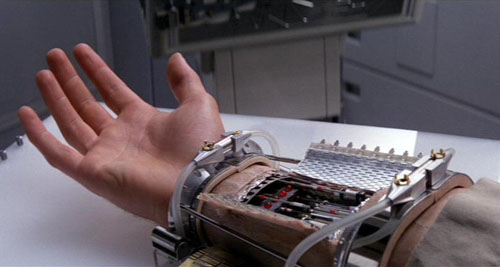
OK, maybe Luke wouldn’t envy this hand, but it looks like we are much closer to the technology in The Empire Strikes Back when he gets his hand lopped off by his father. Matthew James is a boy born with a defect that stopped the growth of his arm at the wrist. He just got a brand new hand with the help of the Mercedes F1 Team. Matthew actually wrote Mercedes, the car maker, to ask for help getting an i-Limb Pulse prosthesis in return for displaying their logo on it.
After receiving the letter in June, Mercedes invited Matthew to their headquarters, where he toured the factory and met racing legend Michael Schumacher.
The company [Mercedes] said they were unable to pay for the hand but agreed to help Matthew raise the money, by asking fans and sponsors to make donations.
Mercedes couldn’t pay for the hand? That seems hard to believe. Anyway, it’s a good read so check it out. There was a follow-up video that I’m embedding below.